

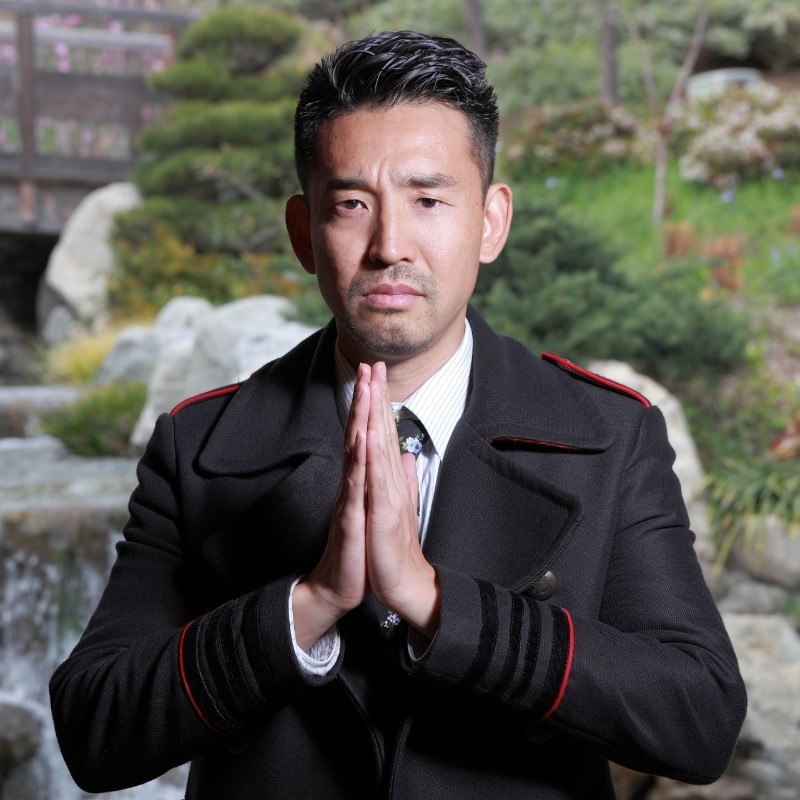
It is time to meet Yujiro Seki, a Japanese documentary filmmaker who a few years, made a film revolving around the 1,400-year old art of busshi, woodcarving statues in the name of Buddhism. The film, Carving the Divine, is a fascinating look at the art and the masters who to this day, are keeping the legacy alive. Mr. Seki was nice enough to answer questions about the film and his connections towards it.
Yujiro, I am really excited to talk to you about Carving the Divine. I found this to be a fascinating look at this classic traditional style of carving and its inspirations from Buddhism?
What was your inspiration for Carving the Divine?
I am a son of a butsudan (Buddhist altar/furniture) maker. When I was little I was surrounded by Buddhist objects, including furniture, statues, incense, shrines, and so on. My father took me along with him to temples all the time, as some of his clients were Buddhist priests. I did not think anything of it at the time. It was just our family business, and I didn’t have much sense of it being more than just a family business. But as I came to the US, attended UC Berkeley, interacted with people from different cultures and experienced art from around the world, I realized the environment I had grown up in was something very beautiful, precious and profound. Ever since I was in high school, I’d always wanted to make a film that inspires people. Finally, the idea of the special movie that I wanted to make that could make a difference in the world came to my mind. So that is what I’ve made a film about, with the intent of sharing that world with the world. Carving the Divine offers a rare and intimate look into the life and artistic process of modern-day busshi—practitioners of a 1400 year lineage of woodcarving that’s at the heart of Japanese, Mahayana Buddhism. In my opinion, my youthful lack of appreciation of our traditional culture wasn’t exceptional. In fact, this lack of wonder and appreciation seems pervasive in Japan, especially amongst those Japanese who never step outside Japanese society. Buddhist statues are ubiquitous in Japan—so much so that most Japanese hardly think anything of them, let alone of the craftsmen who sculpt them. Funnily enough though, Japanese people have a tendency to appreciate their traditions that Westerners have shown great appreciation for. If outsiders praise a Japanese cultural practice, the people of Japan will do everything they can to preserve and protect it. If I were to present Carving the Divine in Japan on my own, however, Japanese people for the most part would not take the busshi tradition seriously. And because of that attitude, busshi are an endangered species. Their artistry still rises to incredible heights of excellence, but the conditions for them to survive in modern-day Japan keep getting more difficult. However, by showing this documentary to the world, and garnering recognition for busshi from people outside Japan, I hope Japanese people will finally see the treasure at their feet for what it is, and make the effort needed to preserve and grow this 1400 year tradition. These sculptures created by busshi are not mere crafts. They have a deep spiritual connection to the collective Japanese psyche.
The master seems to be very strict at times, but also shows a good-natured side when it comes to his apprentices. It is like he wants them to achieve the highest form of their craftsmanship in a way like attaining Nirvana in Buddhism. When you see him disciplining his apprentices, what was it like shooting those scenes?
First of all, as a native-born Japanese person, this kind of discipline is not something unusual in society. Japan is a culture of discipline, and if one enters any kind of training, this kind of strict discipline is expected. So, I was not particularly surprised by observing and shooting these scenes, but I felt the intense tension while filming when these moments of disciplining are taking place. However, it is important to maintain discipline if the apprentices want to make a profession out of Buddhist woodcarving, because without persistent discipline and the mental strength to always get better, you won’t survive the world of Busshi. It’s a world of survival of the fittest. If you want to learn and do more important tasks then you must get ahead of your colleagues. The better you get, the more important jobs you will be assigned. If you don’t improve you will keep doing the same menial tasks, or even less important tasks, if your colleagues surpass you in skill. This is a tough world. Only those with dedication, commitment, and speed can get ahead. Therefore, one of the important jobs of the master is to remind the students about discipline. Because without discipline, the students won’t be able to survive. So, I was very privileged to witness and record these hard-to-be-seen moments.
You were given the rare chance to showcase Shingon (True Word) Buddhist temples, a world that no one outside Japan, let alone anyone outside the priestly level, has ever seen. How were you able to accomplish this goal? I can only imagine it was not an easy task.
The reason I was able to have this rare access into the life and rites of Buddhist priests, and especially those of Shingon, or “True Word” Buddhism is because my family has had a relationship with them for many decades. When I explained the import of the film, these priests granted me the honor and privilege of filming from within their altar area, a secretive space within temples that’s usually off limits to anyone outside the priestly class. So, I believe I was granted access because they believed in my vision to bring this important film to the world, and also because of my family connection to them. Without either, I probably would not have been able to accomplish this task.
I think this is a very important documentary that people who are into traditions and art should definitely check out. Do you have plans to do another documentary similar to Carving the Divine?
Often people ask me about my next project, but currently, everything that I do revolves around Carving the Divine. The film is complete, but we are still in the distribution phase. So, my job is not done yet. I put my heart and soul into Carving the Divine. I am 100 percent all-in with Carving the Divine. Therefore, I cannot think of any other project, because if I did I would not be able to devote everything I have into the project. At some point, I have realized that the project is a lot more than just my personal egotistic glory. I truly believe that this 1400-year-old art tradition is a lot more than my own existence. I have to humbly admit that I’m a mere person who happened to make a documentary about it. So, I take this Carving the Divine project as my duty on earth before I transition to the next world. That’s the reason why I take it very seriously. Yes, the short answer to your question is no at this point, I’m not thinking of making another documentary similar to Carving the Divine.
For more information, you can learn more by going to the Carving the Divine official website and see the film now on FilmHub. Yujiro, thank you so much for taking the time to talk about this amazing film.
• Website: https://www.carvingthedivine.com/
• Email: carvingthedivine@gmail.com
• Email list: https://www.carvingthedivine.com/landing-for-email-signup
• Facebook: https://www.facebook.com/CarvingTheDivine/
• Instagram: https://www.instagram.com/carvingthedivine/
• Twitter: https://twitter.com/CarvingDivine
• YouTube: https://www.youtube.com/c/carvingthedivine
• IMDb: https://www.imdb.com/name/nm2603627/?ref_=tt_ov_dr
This was very meaningful, thank you so much! We wish you continued success!
A Special Thanks to Yujiro Seki and October Coast PR for making this interview possible.
 INDIE WORLD CINEMA
Leave a comment